

Commentary
The conflict is exposing the deep energy vulnerabilities of Korea’s chip industry.
{
  "authors": [
    "Darcie Draudt-Véjares"
  ],
  "type": "commentary",
  "blog": "Emissary",
  "centerAffiliationAll": "dc",
  "centers": [
    "Carnegie Endowment for International Peace"
  ],
  "collections": [
    "Dynamic Governance Risks in Asia",
    "Korea: Emerging Player"
  ],
  "englishNewsletterAll": "asia",
  "nonEnglishNewsletterAll": "",
  "primaryCenter": "Carnegie Endowment for International Peace",
  "programAffiliation": "AP",
  "programs": [
    "Asia"
  ],
  "regions": [
    "South Korea",
    "Middle East",
    "Iran"
  ],
  "topics": [
    "Energy",
    "Economy",
    "Domestic Politics",
    "Foreign Policy",
    "Security"
  ]
}
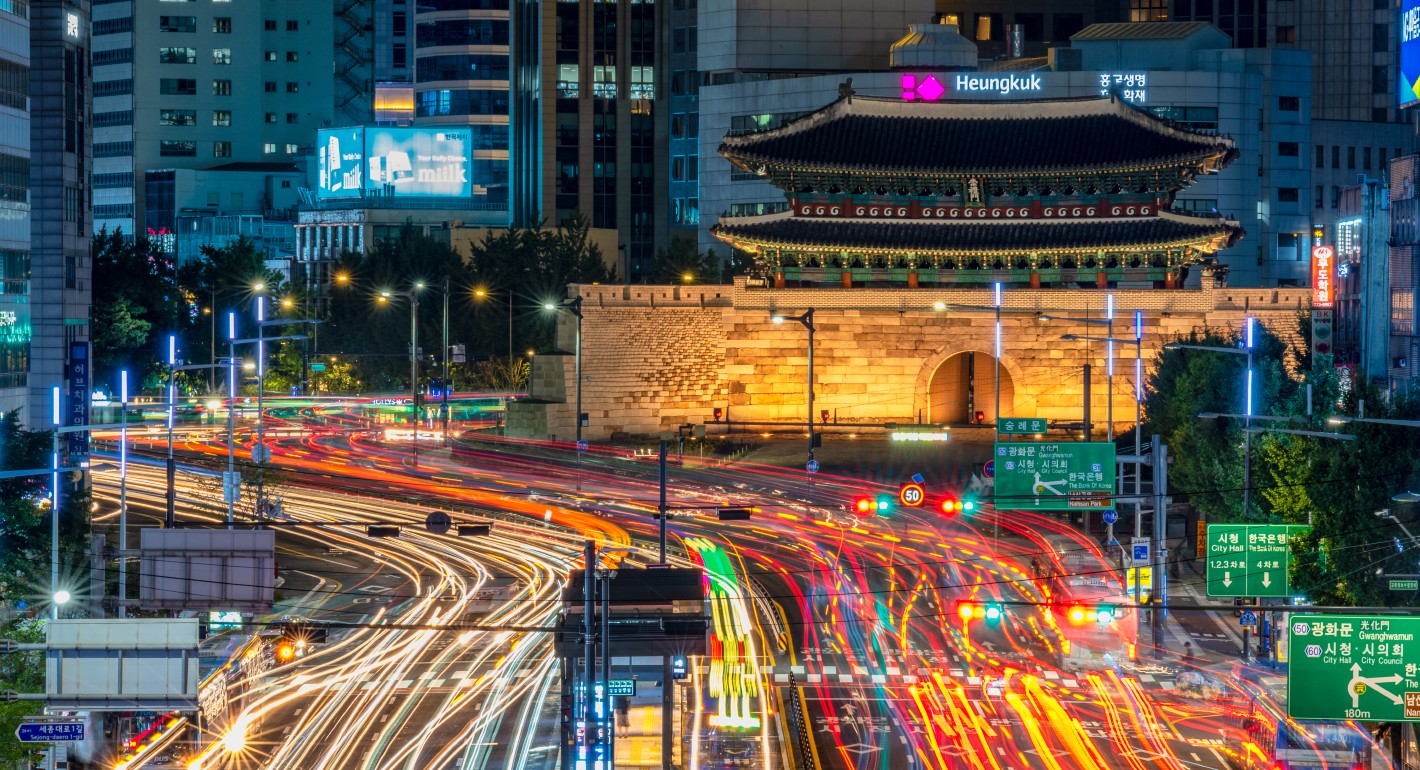
Photo by Mirko Kuzmanovic/iStock
The crisis is not just a story of energy vulnerability. It’s also a complex, high-stakes political challenge.
Iran’s ongoing blockade of the Strait of Hormuz has hit industrial economies dependent on imported fossil fuels hard—and South Korea is especially exposed. For President Lee Jae-myung, who took office in June, the crisis forces a choice between stabilizing energy supplies, sustaining industrial competitiveness, and preserving funds for his inclusive growth agenda.
Lee’s ambitious 123-item policy agenda promoted the idea that these competing goals could advance a progressive agenda. The Hormuz crisis breaks that logic: Immediate fuel subsidies consume budgets earmarked for social spending and inequality programs, while grid modernization and renewable energy promotion—both multiyear projects—cannot stabilize energy supplies during acute shortages.
Since Lee entered office after months of political upheaval with a sweeping mandate to revive a sluggish economy and address inequality, these pressures are especially acute. This makes the current energy crisis not just a story of energy vulnerability, but a tricky political challenge.
At a basic level, Korea’s energy vulnerability stems from its lack of natural resources. It imports 84 percent of its energy largely in the form of oil, coal, and natural gas. Approximately 70 percent of its oil and 20 percent of its natural gas come from the Middle East, mostly via the Strait of Hormuz. In addition, Korea is effectively an energy island, with an electricity grid isolated by surrounding seas and the closed border with North Korea. It has no neighboring grid to draw on during a supply shortfall: Emergency import options that interconnected grids in other countries can turn to simply do not exist here. Its adoption of renewable energy sources has lagged.
In addition, its most important industrial sectors—heavy industry, petrochemicals, and advanced manufacturing—are highly energy intensive and reliant on imported fuel inputs, so the current crisis poses an immediate threat to the country’s economy.
A comparison to Japan shows how political choices shape energy security for resource-poor, industry-reliant nations. Following the oil shocks of the 1970s, Japan aggressively diversified its energy sources—including its nuclear capacity—and built strategic oil reserves. As a result, it is currently much better positioned to weather the Hormuz disruption than its neighbor.
Before the Iran war, Lee was focused on three priorities: sustaining economic recovery, advancing an inclusive growth agenda, and financing Korea’s energy transition. The Hormuz closure has turned these from potentially complementary goals into competing claims on constrained resources.
Lee’s options aren’t great. Doing nothing to manage energy prices erodes household purchasing power and industrial competitiveness. Subsidizing prices drains fiscal space for social programs. Accelerating energy transition investments offers little immediate relief to the shortage threat. As a result, immediate interventions to stabilize the economy risk eroding the fiscal and political space needed to deliver on his broader progressive agenda.
First, maintaining industrial competitiveness and economic recovery requires stable and affordable energy inputs—but Lee’s AI-centered growth strategy also consumes a lot of energy. Moreover, the fossil fuel shortage threatens Korea’s heavy industry and tech manufacturing sectors, including steel, petrochemicals, shipbuilding, semiconductors, and automobiles. In particular, Lee’s bet on semiconductor manufacturers at the center of the global AI boom has paid off: Korea’s Samsung and SK Hynix together supply a dominant share of global memory chips that underpin AI and cloud infrastructure. But this means that an energy disruption in Korea would reverberate globally.
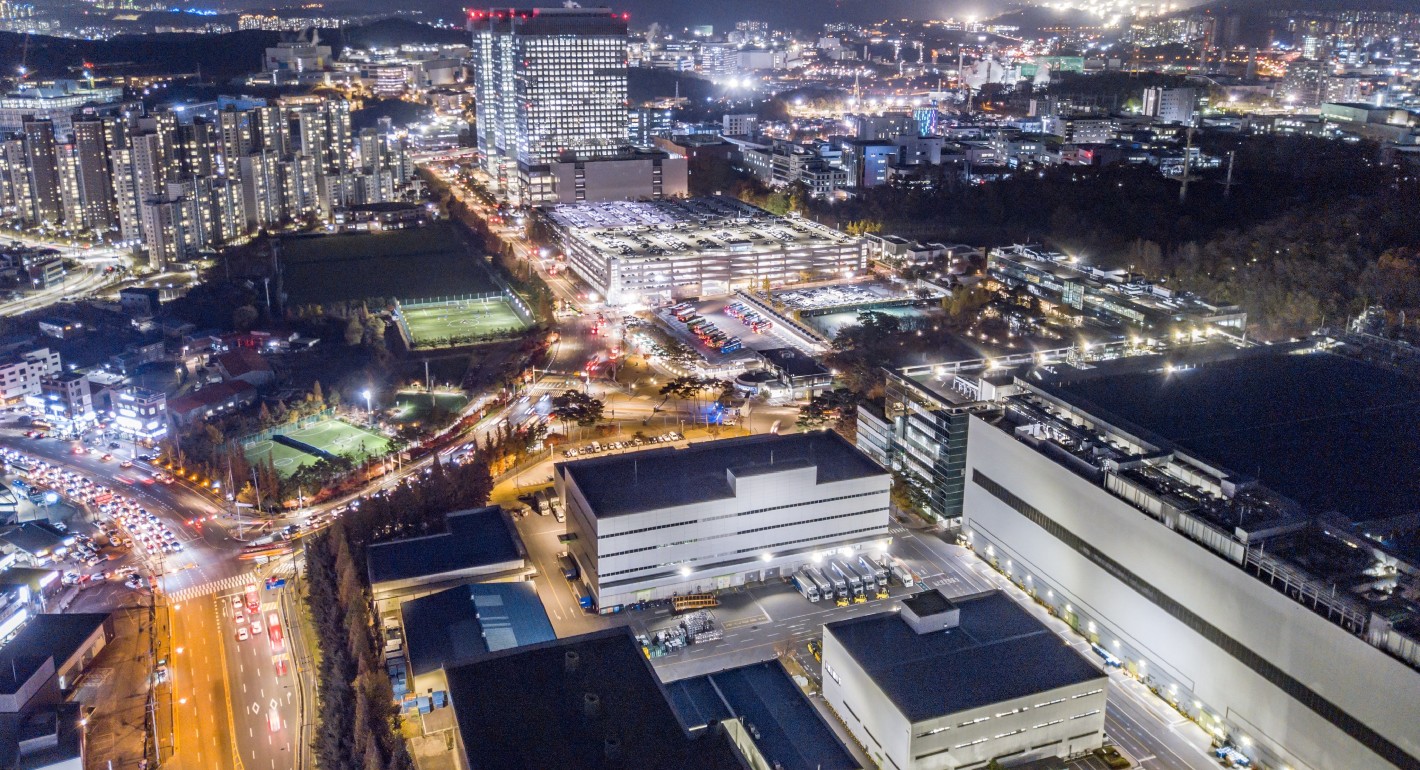
The conflict is exposing the deep energy vulnerabilities of Korea’s chip industry.
Industry accounts for around half of Korea’s electricity demand, much of it generated from imported coal and natural gas, while the broader economy still relies on oil. If Korea’s energy security is threatened, so too is its growth outlook—both in its capacity to produce and in investor confidence. Maintaining this priority will require Lee to commit public resources toward short-term interventions to manage pricing.
Second, a cornerstone of Lee’s agenda is a society-centered reform program. His administration’s refrain of inclusive growth targets both social inequality—such as the dual labor market, housing costs, and social safety nets—and structural imbalances, including the long-standing market concentration dominated by large conglomerates and regional disparities.
But this agenda depends on funds that rising energy costs quickly consume. In the near term, Lee’s fuel price caps and compensation schemes help shield households from the immediate shock but shift costs onto the public balance sheet. Although this year’s budget was approved in December, the solutions to the energy shock will likely force Lee to scale back major elements of his multiyear agenda, including housing subsidies and expanded welfare spending that require sustained allocation in the tens of trillions of won (billions of U.S. dollars). These reforms remain popular among Lee’s base, but advancing them will require significant political capital—particularly if public confidence in the government’s ability to manage economic growth amid the Iran war begins to erode.
Third, Lee has pushed Korea’s energy transition to renewable energy sources and grid reform—difficult changes that require long-term investment. Despite years of efforts to increase offshore wind capacity and solar, Korea’s use of renewables lags behind its OECD peers, accounting for only 10 percent of electricity generation.
The latest from Carnegie scholars on the world’s most pressing challenges, delivered to your inbox.
Korea’s renewables adoption is partly constrained by factors such as grid bottlenecks and geographic limits. But political headwinds, including NIMBYism and regulatory inertia, have been the perennial constraint on modernization. For example, renewable generation is concentrated in Korea’s southwest, but the transmission capacity of that renewable-sourced electricity to the Seoul metropolitan area, where demand is highest, remains constrained by limited grid connections and local opposition to new power lines.
Considering these three priorities together, the most durable path to energy security—greater investment in domestic and renewable sources—is also foundational to future economic resilience. Continued exposure to external energy shocks undermines Korea’s ability to sustain growth, and without growth, it cannot finance labor reforms or expand the social safety net. This presents a core conundrum for Lee’s progressive agenda.
Lee’s immediate challenge is that the Hormuz crisis turns his core policy priorities into binding tradeoffs. At the moment, Lee is prioritizing energy security over a renewable-focused agenda: The Ministry of Climate, Energy and Environment has moved to restart several nuclear reactors ahead of schedule and is considering increased coal generation if natural gas supply tightens. If global energy prices stabilize soon, Lee will have to decide whether to reverse the nuclear and coal restarts—which would be difficult logistically and politically—or keep that capacity online. In fact, the government had already backtracked on its nuclear phaseout plan by announcing two new nuclear power plants, which suggests Lee may struggle to meet his renewable target on schedule.
For now, Lee retains relatively strong public support, in the sixtieth percentile—impressive, given the country’s enduring polarization—allowing him some political space to navigate these tradeoffs. But that cushion may narrow if energy costs begin to more visibly erode household welfare and industrial performance.
In the longer term, Lee will need to grapple with how to promote industrial resilience in tandem with his pledged labor and social safety net reforms. If economic growth continues to rely on large conglomerates that still wield considerable influence over policy, it will be difficult for Lee to pursue reforms—such as shorter working hours and wage gap reductions—that could undercut their bottom lines.
In practice, the energy shock compresses the space for policy choice, as neither consumers nor industry can absorb sustained shortages in the near-to-medium term. Lee’s moves in the coming months will show whether his progressive commitments were only possible under favorable conditions. While this external shock and the structural limits of Korea’s power system are not of Lee’s own making, they reinforce the pragmatic political logic by which he defines his presidency—while steadily tightening constraints on the progressive priorities that underpinned his electoral mandate.

Fellow, Asia Program
Darcie Draudt-Véjares is a fellow in the Carnegie Asia Program.
Recent Work

Darcie Draudt-Véjares, Tim Sahay
Darcie Draudt-Véjares
Carnegie does not take institutional positions on public policy issues; the views represented herein are those of the author(s) and do not necessarily reflect the views of Carnegie, its staff, or its trustees.
The cracks between Trump and Netanyahu have become more pronounced, particularly over energy and leadership targets.

Eric Lob
The conflict is threatening stability in Armenia and Azerbaijan.

Zaur Shiriyev
The conflict is exposing the deep energy vulnerabilities of Korea’s chip industry.
Darcie Draudt-Véjares, Tim Sahay
Even if the Iran war stops, restarting production and transport for fertilizers and their components could take weeks—at a crucial moment for planting.

Noah Gordon, Lucy Corthell
The recent record of citizen uprisings in autocracies spells caution for the hope that a new wave of Iranian protests may break the regime’s hold on power.


Thomas Carothers, McKenzie Carrier